+91-9866908086, +91-9494138086


The True Monthly Cost of Diabetes Pills: Is Your Daily Regimen Costing You More?
Contents of This Post:
- Understanding Your Prescription: A Look at Common Diabetes Medicines in India
- The Hidden Challenge of Daily Dosing: More Than Just Remembering a Pill
- The Ripple Effect: How Missed Doses Impact Your Health and Wallet
- Finding a Sustainable Solution: The Value of Treatment Consistency
- Having the Conversation: How to Discuss Your Treatment Plan with Your Doctor for Diabetes
If you are among the millions of Indians managing type 2 diabetes, your day likely starts and ends with a familiar ritual: the taking of your pills. That small, daily act is a powerful commitment to your health. But have you ever stopped to calculate the real cost of that commitment?
We’re not just talking about the price you see on the pharmacy receipt. The true cost is a combination of the financial drain on your wallet and the silent, exhausting burden of what’s known as “pill fatigue”—the mental weight of remembering, organising, and taking medication day after day, month after month, without fail.
It’s a grind. And when life gets busy, it’s this fatigue that often leads to missed doses, which can send your blood sugar levels on a rollercoaster, undermining all your efforts and potentially leading to costlier health problems down the line.
But what if there was a way to simplify this routine? What if you could reduce the number of pills you take from 30 or 60 a month to just four, while still achieving effective blood sugar control?
In this article, we will pull back the curtain on the monthly expenses of common diabetes medicines, from the oldest generics to the latest therapies. More importantly, we will explore how modern options like the once-weekly WIKLYONE (Trelagliptin 100 mg) are changing the game—not just for your health, but for your peace of mind and your pocket. Let’s dive in.
Understanding Your Prescription: A Look at Common Diabetes Medicines in India
When your doctor hands you a prescription for diabetes, it’s often filled with names that can seem confusing. Simply because, you’re not expected to be an expert—that’s your doctor’s role. They carefully select medicines based on your specific blood sugar levels, overall health, and individual needs.
However, understanding the common types of medicines you might be prescribed can empower you to have more meaningful conversations with your doctor about your treatment plan. Also, it helps you understand the “why” behind your prescription and the associated costs.
Most anti-diabetic pills belong to different “classes,” each working in a unique way to control blood sugar. Often, doctors prescribe a combination of these to create a balanced and effective approach.
The table below outlines some of the common classes of oral diabetes medications you might encounter in India. This is not a guide for self-selection, but a reference to help you better understand the landscape of your treatment.
Anti-Diabetics in India and Average Monthly Cost of Diabetes Management:
| Drug Class | Commonly Prescribed Brands (Examples) | Common Dosage Frequency | Approximate Monthly Cost (INR) |
| Biguanides (e.g., Metformin) | Glycomet, Glyciphage, Gluconorm, (more) | Once or Twice Daily | ₹100 – ₹250 |
| Sulfonylureas | Glynase, Amaryl | Once or Twice Daily | ₹150 – ₹400 |
| DPP-4 Inhibitors | Januvia (Sitagliptin), Jalra (Vildagliptin) | Once Daily | ₹400 – ₹900 |
| SGLT2 Inhibitors | Jardiance, Forxiga | Once Daily | ₹800 – ₹1,500 |
| Fixed-Dose Combinations (FDCs) | Glycomet-GP, Istamet | Once or Twice Daily | ₹300 – ₹700 |
| Once-Weekly DPP-4 Inhibitor | WIKLYONE (Trelagliptin) | Once Weekly | ₹594 |
As you can see, treatment strategies can vary. Usually, many patients start with Metformin, and if needed, another medicine from a different class, like a DPP-4 inhibitor, may be added. This is where the monthly cost can increase.
So, the key takeaway is that modern diabetes management offers a range of options. For instance, if your treatment plan includes a DPP-4 inhibitor, it’s helpful to know that there are multiple choices available, including the convenience of a once-weekly pill like WIKLYONE (Trelagliptin).
Your doctor will decide what’s best for you. But being aware of these options allows you to discuss aspects like dosage frequency and cost more openly during your consultation. The goal is to find a regimen that is not only effective but also fits your lifestyle, making it easier for you to stick to it in the long run. Besides, cost-effective and affordable medicines for managing diabetes are equally essential because the patient needs to take them for a long time management. Hence, the medicine must fit in the monthly budget of the patients or they may start skipping it only to cut corners.
The Hidden Challenge of Daily Dosing: More Than Just Remembering a Pill
While your diabetologist expertly chooses the right medicine for your body, you are the one who manages that treatment every single day. This is where a crucial, often overlooked challenge comes into play: the reality of living with a daily medication routine.
Think about your own experience. Have you ever:
- Firstly, forgotten to take your morning pill in the rush to get out the door?
- Or been unsure if you already took your dose for the day?
- Another one, found it difficult to coordinate multiple pills at different times?
- Or felt the mental exhaustion of knowing this is a lifelong commitment?
If this sounds familiar, you are experiencing what is known as “pill fatigue.” However, it’s not a sign of failure; rather, it’s a natural human response to the demanding nature of chronic disease management. This goes far beyond simple forgetfulness. It’s the psychological burden that can make sticking to a prescription feel like a constant uphill battle.
Why does this matter so much? Because consistent adherence is the bridge between a doctor’s prescription and successful health outcomes as are desired by prescribed treatment regimens. When doses are missed, even occasionally, blood sugar levels can become unstable. This inconsistency can lead to:
- Firstly, frustration when your HbA1c readings don’t reflect the effort you feel you’re putting in.
- Secondly, an increased risk of long-term complications related to poorly controlled diabetes.
- Also, potential need for even more medication or dosage adjustments later.
Your doctor prescribes a medicine to maintain steady control. But the most effective drug in the world can only work if it’s taken as directed. Also, a treatment plan isn’t just about the type of medicine; it’s also about finding a regimen that is sustainable for you.
The Ripple Effect: How Missed Doses Impact Your Health and Wallet
When life gets busy and a pill gets forgotten, it might seem like a small thing. But in diabetes management, these small moments can create a ripple effect that touches both your health and your finances. Let’s connect the dots between missed doses and what they truly cost you.
The Immediate Health Impact
Think of your diabetes medication as a steady hand helping to maintain your blood sugar levels throughout the day. So, when you miss a dose, that steady hand disappears. Then, the result? Your blood sugar can spike unpredictably.
While a single missed dose might not seem catastrophic, when it happens repeatedly, it leads to:
Unstable glucose readings that feel like a rollercoaster.
Consistently higher HbA1c levels despite your best efforts.
Increased risk of symptoms like fatigue, increased thirst, and blurred vision.
The Long-term Health Consequences:
This isn’t just about today’s numbers. Consistently elevated blood sugar levels, even from occasional missed doses, can quietly damage your body’s systems over time. Research shows that poor adherence to diabetes medication is linked to:
- Firstly, higher rates of diabetes-related complications. The probability for developing complications inccrease.
- Secondly, an increased risk of cardiovascular problems likely adding up to more pills and management.
- Thirdly, a greater likelihood of nerve damage and kidney issues. Diabetic neuropathy is a silent and yet the most common complication with uncontrolled blood sugar levels.
- Furthermore, a greater likelihood of diabetic retinopathy
The Hidden Financial Cost
Now, let’s talk about what this means for your wallet. When medication adherence drops and blood sugar control suffers, the financial impact appears in several ways:
- More Doctor Visits: Firstly, uncontrolled numbers often mean more frequent follow-ups and consultations.
- Additional Tests: Now, when you visit your doctor, you are likely to receive a list of diagnostic tests to undergo for revising your treatment regimen and also to diagnose the length of damage. So, your doctor may need to order more frequent blood work and monitoring.
- Extra Medications: Now, with results in hand, you might need additional prescriptions to manage complications.
- Potential Hospitalisations: Finally, in severe cases, poor control can lead to emergency care needs.
The numbers tell a sobering story: Studies have shown that patients with poor medication adherence can end up spending significantly more on healthcare in the long run. In fact, research indicates that diabetes patients with low adherence have healthcare costs that are substantially higher than those who take their medications consistently.
Breaking the Cycle
However, there is a piece of good news and it says, “This cycle can be broken”. By finding a treatment regimen that fits your lifestyle and is easy to follow, you’re not just making your daily life easier – you’re making a smart investment in your long-term health and financial well-being.
So, this is where considering treatment adherence as a part of diabetes management becomes as important as the medication itself.
Finding a Sustainable Solution: The Value of Treatment Consistency
If missed doses create such significant challenges for both health and financial outcomes, what’s the solution? The answer lies in finding a treatment approach that makes consistency easier to achieve. This is where we need to look beyond just the medication’s effectiveness and consider how well it fits into a person’s daily life.
The Daily vs. Weekly Dilemma
Most diabetes medications follow a daily dosing schedule. While this works well for many people, for others, remembering to take medication every single day can become challenging over time. This is particularly true for:
- Firstly, people with busy or unpredictable schedules.
- Secondly, it stands true for those managing multiple medications for different conditions.
- Besides, individuals who travel frequently.
- Finally, anyone who simply finds daily medication routines difficult to maintain.
The Science of Simplicity
This is where treatment innovation can make a real difference. Consider the difference between a daily and weekly medication:
| Daily DPP-4 Inhibitors: | Weekly WIKLYONE (Trelagliptin): |
| 30 pills per month | 4 pills per month |
| Daily remembering required | Once-weekly routine. So, a simple mobile reminder is enough. |
| Potential for missed doses during busy days | Easier to remember and plan for. |
| Need to coordinate with meals or other medications | Less coordination with other daily activities |
The numbers speak for themselves – reducing from 30 dosing moments to just 4 per month significantly simplifies the treatment routine. But the benefits go beyond simple arithmetic.
More Than Just Convenience
A weekly treatment approach offers several advantages that contribute to better long-term outcomes:
- Reduced “Decision Fatigue”: Firstly, fewer daily decisions about medication timing.
- Built-in Consistency: Secondly, weekly routine creates a more predictable pattern.
- Fewer “Catch-up” Moments: Then, no worrying about whether you missed today’s dose.
- Psychological Relief: Finally, the mental burden of daily medication management decreases significantly
The Bigger Picture
When we consider diabetes management, we’re not just treating numbers on a glucose monitor – we’re supporting people in living their lives while managing a chronic condition. The easier it is to stick with a treatment plan, the better the long-term outcomes tend to be.
This is why discussing treatment frequency with your doctor matters. It’s not just about which medication works best chemically, but which treatment approach works best for your life and routine.
Having the Conversation: How to Discuss Your Treatment Plan with Your Doctor
Understanding your options is the first step. Then, the next crucial step is having an open conversation with your doctor to find the treatment approach that works best for your life and health needs. Remember, you are an active participant in your healthcare journey, and your experience matters.
Your Role in Your Treatment Plan
Preparing for Your Appointment
Before your next doctor’s visit, take a moment to reflect on these questions:
Firstly, “How consistent have I been with my current medication?”
Here, be honest about any challenges you’ve faced with your daily routine.
Secondly, “What part of my current treatment is most difficult?”
Here, figure out if it is remembering multiple doses? Or timing with meals? Or the number of pills? It can also be something else bothering your diabetes care routine.
Then, “How does my medication schedule fit with my work and life?”
Here, consider your job, travel patterns, and daily responsibilities. Do not feel guilty because that will not solve any of your problems. Even household chores or responsibilities can lead to forgetfullness. It is normal and you do not have to look down for that. Rather, you need a solution that can help you balance your routine with your medicines.
Starting the Conversation
Here are some straightforward ways to bring up treatment options with your doctor:
“Doctor, I sometimes find it challenging to remember my daily medication. Are there options that might be easier to follow?”
“I’ve been reading about different approaches to diabetes management. Could you help me understand what might work best for my situation?”
“I’m concerned about maintaining consistent blood sugar control. What treatment approach would give me the most stable results?”
What to Ask About Treatment Options
When discussing potential treatments, consider asking about:
- Dosing Frequency: “How might a weekly medication compare to daily options for someone with my schedule?”
- Long-term Consistency: “Which approach tends to help patients stay on track over months and years?”
- Overall Value: “Beyond the pharmacy cost, what are the other benefits we should consider?”
Why Weekly Treatment Might Be Worth Discussing?
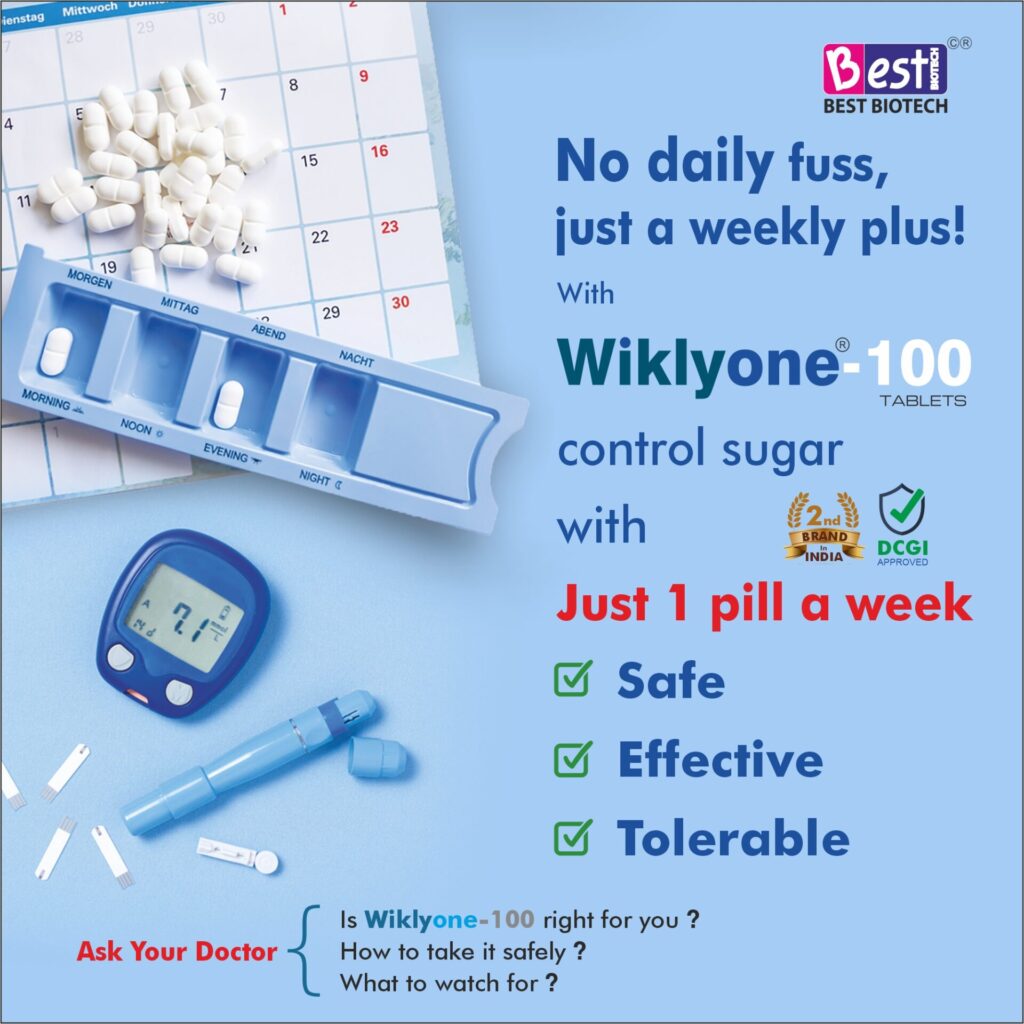
Based on our previous discussions about adherence challenges and their impact, a weekly medication like WIKLYONE (Trelagliptin) could be relevant if:
- You want to simplify your medication routine.
- You have a busy or unpredictable schedule.
- You’re looking for a way to reduce the mental burden of daily pill-taking.
- You want to minimise the risk of missed doses affecting your blood sugar control.
Working Together on Solutions
Your doctor might consider various factors when discussing weekly versus daily medications, including:
- Your current blood sugar control levels,
- Other health conditions you may have,
- Potential interactions with other medications, and
- Your treatment history and what has or hasn’t worked.
Next Steps After the Conversation
If you and your doctor decide a weekly approach might be suitable, you can discuss:
- Firstly, how to safely transition from current medications.
- Secondly, what to expect in terms of results and timing.
- Then, how to monitor your progress.
- Also, when to follow up and assess how the new approach is working.
Remember: The goal isn’t to tell your doctor what to prescribe, but to have an informed discussion about finding the most sustainable path forward. Your openness about your daily challenges helps your doctor make the best possible recommendation for your unique situation.
The most effective diabetes treatment is one that not only works medically but also fits seamlessly into your life – helping you maintain consistent control with less stress and better long-term outcomes.
Related Posts:
- Once a Week Medicine for Diabetes: WIKLYONE (Trelagliptin): How it Works?
- WIKLYONE: Life-Changing First-of-its Kind Diabetes Medicine
- Pharma Franchise & PCD Opportunity: Market WIKLYONE, the Future of Diabetes Management
- Best Cardia Division Products
One thought on “The True Monthly Cost of Diabetes Pills: Is Your Daily Regimen Costing You More?”