+91-9866908086, +91-9494138086

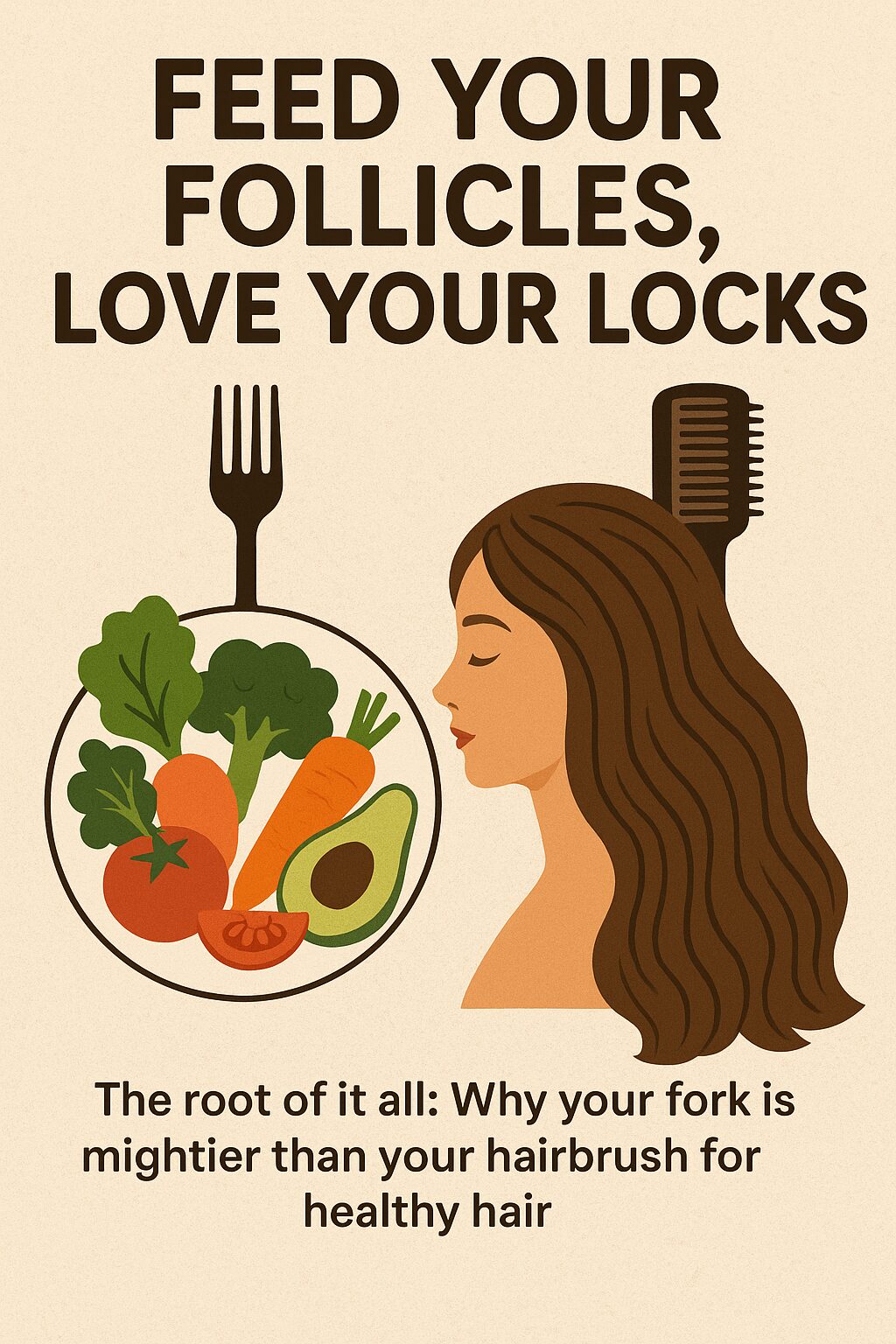
The Root of It All: Why Your Fork is Mightier Than Your Hairbrush for Healthy Hair?
Contents of This Post:
- The Anatomy of a Hair Strand: You Literally Are What You Eat.
- Limitations of Topical Magic: Why Hair Oils, Shampoos, Creams and Serums Can Only Do So Much?
- The Internal Engine: Key Nutrients That Fuel Your Hair Factory
- Beyond a Good Diet: When You Need Targeted Nutritional Support
- Why Trichorite? A Symphony of Science, Not Just a Single Note
- The Most Important Step: A Conversation With Your Doctor or Dermatologist
Have you ever stood in front of your bathroom mirror, staring at a collection of hair serums, oils, and masks, and wondered, “Why am I still seeing more hair in my brush than on my head?” If this feels familiar, you’re not alone. In our quest for luscious locks, we’ve become experts in external fixes, contributing to a global hair care market valued at a staggering $100 billion. Yet, for countless people, the results remain frustratingly thin.
We meticulously apply products to our strands, hoping for a miracle in a bottle. But what if the true secret to transforming your hair health isn’t found on your shelf, but on your plate?
Yes, The Truth Lies on Your Plate and Not on What You Apply on Your Hair
The truth is, no amount of topical magic can compensate for a lack of internal building blocks. Think of it this way: you can polish the exterior of a car every day, but if its engine is out of fuel, it’s not going anywhere. Similarly, your hair is the final product of a complex internal factory. So, the quality of its construction depends entirely on the raw materials you supply through your diet.
In this post, we’re going to explore why the nutrients you consume are the true architects of every strand of hair. Besides, we’ll look beyond the surface and dive deep into the fascinating journey from your plate to your pate, revealing how targeted nutrition can achieve what even the most expensive serums cannot. Now, let’s dig into the root of the matter.
The Anatomy of a Hair Strand: You Literally Are What You Eat
We all heard in our Hindi lessons, “जैसा खाओगे अन्न, वैसा होगा मन ”, and that’s true. It emphasises healthy eating for a healthy brain and wisdom. What’s equally true is, “जैसा खाओगे अन्न, वैसा होगा तन”, emphasising that what we eat shapes our whole body. So, we become what we eat. Furthermore, to make the phrase more meaningful, we would rather say that what we eat and how we eat shape what we are.
Let’s start with a fundamental truth that might just change how you see your next meal: every single strand of hair on your head is essentially a protein filament constructed from the nutrients in your bloodstream. In the simplest terms, your hair is quite literally made from what you eat.
Imagine your hair follicle as a tiny, incredibly efficient factory nestled in your scalp. This factory has one job: to build hair. Now, like any factory, it needs a constant delivery of raw materials to work with. These materials arrive via your bloodstream – think of it as the factory’s delivery service.
So what’s actually happening in this factory?
- Firstly, the main building material is a tough protein called keratin.
- Now, to produce this keratin, the factory needs amino acids from dietary protein.
- Secondly, the machinery (hair cells) need energy to multiply and grow.
- So, for that various “workers” (vitamins and minerals) help assemble everything properly.
Here’s where it gets fascinating: this factory operates on a tight schedule. The average scalp grows about 100,000 hairs, with each one growing approximately half an inch per month. Now, that’s a massive construction project happening right there on your head!
When this factory receives all the right materials:
- Firstly, the assembly line runs smoothly.
- Secondly, the hair strands come out strong and shiny.
- And the growth continues at a healthy pace.
But when there are shortages in the delivery:
- Firstly, production slows down.
- Then, the quality suffers (brittle, weak hair).
- Additionally, sometimes the factory might even temporarily shut down.
This isn’t just theoretical – research shows that nutritional deficiencies can directly impact hair structure and growth. A study in the Journal of Clinical and Aesthetic Dermatology noted that “nutritional deficiencies can affect both hair structure and hair growth, and can be triggered by protein, energy, or micronutrient deficiencies.”
The takeaway? While you’re applying those serums and masks to the finished product (the hair shaft), the real construction work is happening deep within, where your dietary choices are either providing premium building materials or leaving your personal hair factories running on empty.
The Limitations of Topical Magic: Why Hair Oils, Shampoos, Conditioners, Creams and Serums Can Only Do So Much?
Let’s be clear: we’re not saying your favourite hair serum or shampoo and conditioner or even hair oil is useless. Those topical products definitely have their place in your routine! They can smooth the hair cuticle (the outer layer of each strand), add instant shine, reduce frizz, and even help manage scalp conditions like dandruff.
Try the new favourite of many men and women, HAICARE hair serum. It not only allows you hassle-free styling, but the best thing is its suitability for shielding all hair types against damage, humidity and pollution.
Topical products are good, but they are not sufficient. So, they are the equivalent of giving your car a fantastic wax and detail—it looks incredible and has protection from the elements.
However, here’s the crucial distinction: they are working on the finished product, not the manufacturing process.
The biggest biological hurdle for any topical treatment is your body’s own incredible design. Your skin, including your scalp, is a remarkable barrier. Its primary job is to keep things out—environmental toxins, pollutants, and harmful microbes—to protect your delicate internal systems. So, this very effective defence system also makes it incredibly difficult for the large molecules in most serums and creams to penetrate deeply enough to reach the living part of the hair follicle, which is located about 4 millimetres beneath the skin’s surface.
Think of it like this:
You can polish an apple to a brilliant shine, but that polish can’t change the fact that the apple itself was grown from a tree with nutrient-poor soil. So, the core quality was determined from within.
Most topical treatments work on the hair shaft itself, which is actually dead tissue. They can’t:
- Command your follicle to enter the growth phase.
- Or increase the supply of keratin or other building blocks.
- Or even boost blood circulation to deliver more nutrients.
This is why the results from even the most expensive topical treatments are often temporary and cosmetic. They can make the hair you already have look and feel better, but they are poorly equipped to fundamentally improve the health, strength, and growth of the hair you have yet to grow.
So, the foundation for that new, healthy hair is built in the follicle, a construction site that is fed not by hair oils or serums but by your bloodstream. This brings us to the most important part: what are the essential raw materials, and how do you make sure your body’s delivery truck is fully loaded?
In the next section, we’ll break down the key nutritional “construction workers” and how they team up to build your strongest, healthiest hair yet.
The Internal Engine: Key Nutrients That Fuel Your Hair Factory
Now that we understand why internal nutrition matters so much, let’s meet the all-star team of nutrients that your hair follicles desperately need to do their job well. Think of these as the specialised construction workers, architects, and project managers in your personal hair-building factory.
1. The Architects (Protein & Biotin)
Protein is the fundamental building block. Since hair is primarily made of keratin (a protein), without adequate protein intake, your body simply can’t produce quality hair strands. So, without keratin, it’s like trying to build a brick wall without bricks.
Next, Biotin (Vitamin B7) acts as a foreman in this process. It’s crucial for keratin production. While severe biotin deficiency is rare, studies have shown that supplementation can improve hair health in deficient people.
2. The Construction Crew (Zinc & Selenium)
Zinc plays a vital role in hair tissue growth and repair. It helps keep the oil glands around follicles working properly. Moreover, zinc deficiency is one of the most common nutritional links to hair loss.
Then, Selenium acts as a powerful antioxidant, protecting hair follicles from damage caused by free radicals. It also helps regulate the hair growth cycle.
3. The Delivery System (Iron & B-Vitamins)
Next is iron that helps red blood cells carry oxygen to your cells, including hair follicles. Without adequate iron, these follicles are starved of the oxygen they need to function properly, which can disrupt the hair growth cycle.
Then, B-Vitamins like B12 and Folate are essential for creating red blood cells and supporting cellular metabolism – all crucial for delivering nutrients to hair follicles.
4. The Site Managers (Antioxidants like NAC)
N-Acetyl Cysteine (NAC) is a powerful antioxidant that helps replenish glutathione, one of your body’s most important cellular defenders. By combating oxidative stress, NAC protects delicate hair follicles from damage that can lead to thinning and ageing-related hair loss.
The magic happens when all these nutrients work together in the right balance. For instance, taking high doses of zinc without adequate copper can actually cause copper deficiency, which itself can lead to hair problems. This is why balanced nutrition is so crucial – it’s about creating the perfect environment for hair growth, not just dumping truckloads of one single nutrient.
In our next section, we’ll explore why even with a good diet, many of us still struggle to get these nutrients in the right balance for optimal hair health, and when targeted supplementation might be the missing piece of the puzzle.
Beyond a Good Diet: When You Need Targeted Nutritional Support
We’ve just met the all-star team of nutrients your hair craves. So, if you’re eating a balanced diet, why might your hair still not be getting the memo? The reality of modern life often creates a “nutritional gap” between what we eat and what our hair factories actually receive.
Even with the best intentions, several factors can interfere:
- Soil Depletion: Firstly, modern farming practices have led to a decrease in the micronutrient content of our fruits and vegetables over the decades. That spinach salad might not be as iron-rich as it was for previous generations.
- Busy Lifestyles: Secondly, relying on processed or convenience foods for speed often means meals are less nutrient-dense.
- Stress & Pollution: Then, chronic stress and environmental toxins can increase the body’s demand for certain nutrients, like B-vitamins and antioxidants, leaving less available for non-essential functions like hair growth.
- Digestive Health: Finally, your body’s ability to absorb these precious nutrients depends heavily on a healthy gut. If your gut is healthy, only then the nutrients can be properly absorbed and be available for the intended purposes, including healthy hair.
This is where the concept of targeted nutritional supplementation becomes relevant. It’s not about replacing a healthy diet, but augmenting it. Think of it as sending a direct, specialised supply truck to your hair follicles, ensuring they get a consistent, potent, and balanced dose of the specific nutrients they need to thrive, bypassing the gaps created by modern life.
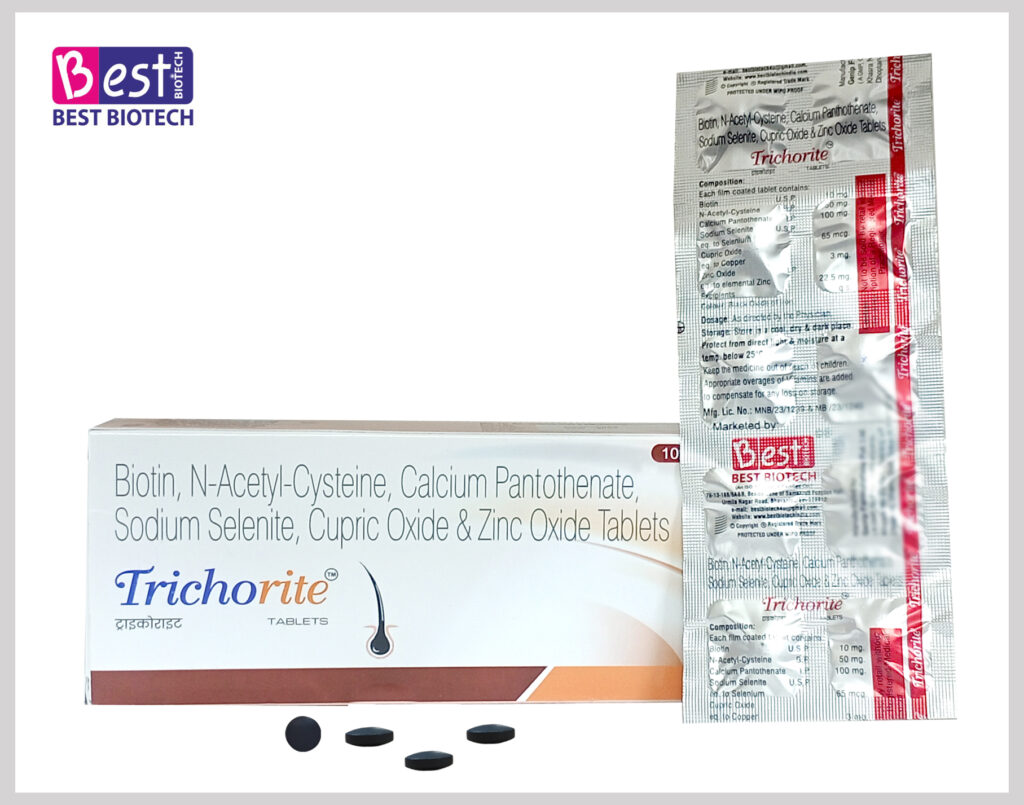
A well-designed supplement, like Trichorite, is formulated for this exact purpose. It isn’t a random mix of vitamins; it’s a synergistic blend that provides the key “construction materials” we discussed—Biotin, Zinc, Selenium, NAC, and more—in scientifically studied doses and ratios designed to address the multifaceted nature of hair health.
However, choosing the right supplement is crucial. In the next section, we’ll explore what makes a supplement truly effective for hair health and why a synergistic formula is far more powerful than just taking a single nutrient in isolation.
Why Trichorite? A Symphony of Science, Not Just a Single Note
You might be wondering, “Can’t I just take a biotin supplement and call it a day?” While biotin is a crucial player, focusing on it alone is like hiring a world-class violinist and expecting to hear a full symphony. True hair health requires an entire orchestra of nutrients working in harmony.
This is the precise thinking behind Best Biotech’s hair care product, “Trichorite”. It’s not a single-ingredient wonder but a comprehensive formula where each component plays a specific, synergistic role.
Let’s break down the science of this synergy that works on each hair strand:
Biotin (10mg) & Zinc (22.5mg): The Growth Duo. Biotin provides the essential support for keratin production, while Zinc ensures the rapid cell division needed in the hair follicle happens smoothly. One builds the blocks, the other manages the construction speed.
N-Acetyl Cysteine (50mg) & Selenium (65mcg): The Defence Team. NAC is a powerhouse antioxidant that boosts your body’s levels of glutathione, the “master defender” against oxidative stress. Selenium supports this antioxidant system and helps activate enzymes crucial for hair follicle health. Together, they protect the delicate follicle factory from damage that can shut down production.
The Critical Mineral Balance: Zinc & Copper. This is a key differentiator. High doses of zinc can deplete copper levels, which can ironically lead to hair problems. Trichorite includes Copper (3mg) in the optimal 7.5:1 ratio to zinc, preventing deficiency and ensuring both minerals work in concert for optimal enzyme function and hair structure.
By providing this balanced, full-spectrum nutritional support, Trichorite is designed to do what isolated supplements cannot: address the multiple, interconnected factors of hair health simultaneously. It nourishes the follicle, protects it from damage, and supports the entire hair growth cycle from within.
However—and this is a crucial point—even the most sophisticated supplement is not a magic bullet. Let’s try to understand this.
The Most Important Step: A Conversation With Your Doctor or Dermatologist
We’ve journeyed through the science of how internal nutrition builds healthy hair and explored how a targeted supplement like Trichorite can help fill nutritional gaps. Now, we arrive at the most critical part of your hair health journey: the step that ensures any path you take is the right one for you.
While the information we’ve shared is powerful, it is not a substitute for professional medical advice. Hair thinning and loss are not diagnoses in themselves; they are symptoms. They can be flags your body raises for a variety of underlying reasons, such as:
- Hormonal Imbalances: Thyroid disorders, PCOS, or perimenopause.
- Nutritional Deficiencies: Low iron (anaemia) or Vitamin B12.
- Autoimmune Conditions: Like alopecia areata.
- High Levels of Physical or Emotional Stress.
- Genetic Predispositions.
This is why the most powerful action you can take is to schedule a conversation with your doctor or a dermatologist. They are the detectives who can help you find the root cause of your hair loss.
How to Approach This Conversation?
Be Prepared: Before your appointment, make a few notes about your hair concerns. When did it start? Has there been a recent illness or period of high stress? What is your typical diet like?
Ask the Right Questions: You can now be an informed participant in the discussion. Ask questions like:
“Could my hair loss be a sign of an underlying nutrient deficiency or hormonal issue?”
“Based on my health profile, could a targeted nutritional supplement be a helpful part of my treatment plan?”
“Would a formula like Trichorite, which focuses on multiple pathways of hair health, be suitable for my situation?”
A healthcare professional can order the necessary tests (like checking your ferritin, thyroid, or vitamin levels) to pinpoint the exact issue. They can then determine if your hair concerns can be addressed with a supplement like Trichorite, or if they require a different, more specific treatment approach.
Feed Your Follicles, Love Your Locks
The path to healthier, stronger hair is not paved with topical miracles, but with foundational, internal care. True hair health is a reflection of your overall well-being, built from the nutrients you consume and guided by professional expertise.
By choosing to nourish your body from within and partnering with a healthcare provider, you are making the most powerful investment possible—not just in your hair, but in your long-term vitality. You are moving beyond quick fixes and building a sustainable future for your health, one strand at a time.
Your journey to stronger hair starts from within. Have that important conversation, and give your hair the foundational support it truly needs to thrive.
For partnering with us in the supply chain of Trichorite, feel free to contact our pharma PCD and franchisee helpdesk.
Quick Links:
- Downloads Division Wise Products
- WIKLYONE: Life-Changing First-of-its Kind Diabetes Medicine
- Pharma Franchise & PCD Opportunity: Market WIKLYONE, the Future of Diabetes Management
- Once a Week Medicine for Diabetes: WIKLYONE (Trelagliptin): How it Works?
- Why Pharma Exhibitions Matter: 9 Top Reasons to Attend Next Pharma Expo
2 thoughts on “The Root of It All: Why Your Fork is Mightier Than Your Hairbrush for Healthy Hair?”